The Changing Role of the Record Label in the New Millennium: The Pros and the Don'ts
Updated: Jul 6

I grew up in Italy listening to vinyl and cassette tapes. I didn't have a computer when I was young, no Spotify, no social media. I made my songs on a bass and an acoustic guitar, and I wrote my lyrics with a pen and paper, recording my ideas on a cassette player.
Back then, if you wanted to make it as a professional musician, there was really only one goal: get a record deal. There was no way to distribute your music unless you had a label behind you with physical distribution. Recording studios weren't affordable for everyone, and that was another place the label was essential. Its job was to find new talent, to spot the next hit song, to invest in that talent and deliver it to the world.
The "don't" of that era was that a handful of record labels served as gatekeepers to the next level. Many artists never got the chance to reach a label at all. And even the ones who did weren't always understood for their potential. Think about Ace of Base, who knocked on nearly every label's door until they found Claes Cornelius of Mega Records, their last chance. Or the Beatles, turned away before anyone said yes.
The good thing about that world was that when a label truly believed in you, its job was to create and produce songs with the quality and the ingredients to become hits. It does not mean that the labels were always right, but at least the role of the A&R was to scout the talent, the creativity, the gem inside every artist, and to invest and take a risk based on the music, not on the marketing skills of the artist. After all, no musician ever set out to become a marketer. Times were tough, but at least the label's focus was on real talent, real songs, real musicians.
Over the last twenty years, everything has changed. Records barely exist anymore; streaming is the new record. Anyone can now produce a song on a computer, and that is a wonderful thing. But it has also flooded the market, and an inflation of new "productions" has come at the expense of quality.
The worst part isn't the flood, though. It's the new role of the record label. The focus has shifted away from discovering and producing new talent. Now the first questions an artist hears are: How many followers do you have? How many streams on Spotify? That is the sad new reality. No more focus on the song. No more focus on developing raw talent. Instead, the artist is expected to already be a digital marketer and a social media influencer.

But here's the contradiction: if an artist already has millions of streams, why would they even need a record label? And how many artists with real potential and creativity are now ignored simply because they don't have the skill, the desire, or the time to become marketers and online personalities?
So what are the options today for a new artist with genuine talent but not yet that level of followers or recognition? That is the real question. Not everyone has the skill, the time, or the desire to learn digital marketing. And how many great songs and gifted artists are being lost to this new system?
Here's my idea: become the record label yourself, and turn technology to your advantage. We can produce songs today for a fraction of what they cost twenty years ago. We can distribute music to the entire world from a single computer. We can partner with marketers to promote it, or learn to do it ourselves.
Yes, the physical record, once the main source of revenue, is nearly dead. But we can build revenue from niches and channels that didn't even exist a few decades ago: live-streamed concerts, online merchandise, YouTube videos shot on nothing more than an iPhone that can go viral generating million of views organically, and global radio airplay reached straight from your laptop. Check this video I created with Claudette Lyons with an iPhone and just 2 tickets to the Empire State Building
One year ago, my mentor Claes Cornelius, co-founder of Mega Records and the man who discovered and launched Ace of Base, told me to start with the radio stations. I had one song, YOU ARE MY DESTINY and he said I had to send it to the world.
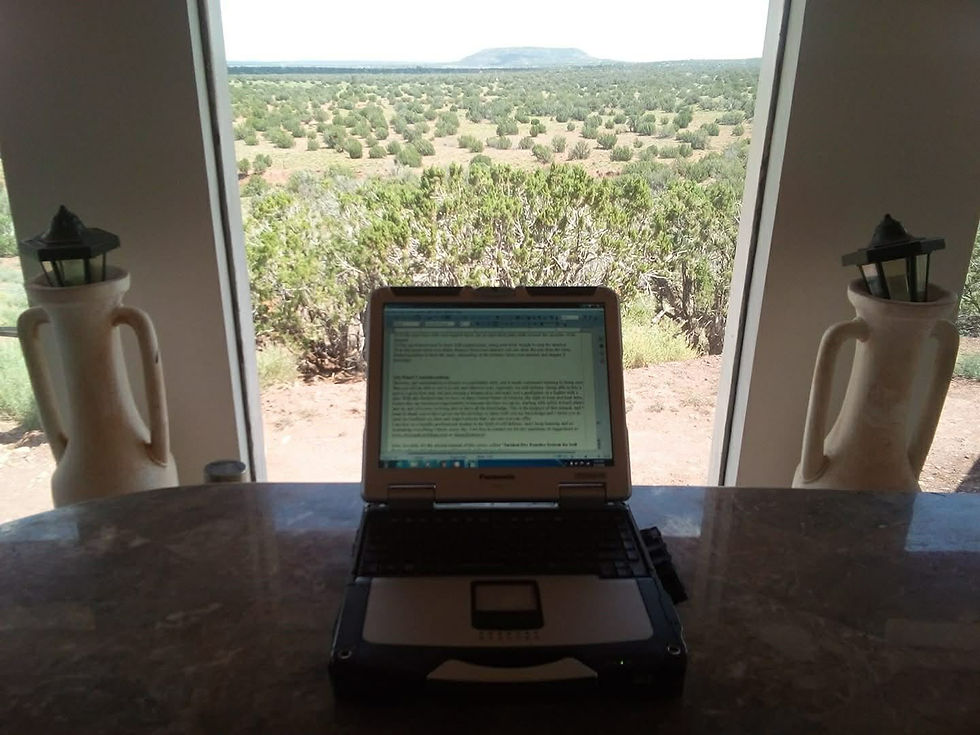
I had no idea how to do it, but I started to learn from a laptop on an off-grid ranch in the middle of the Arizona desert. Just a few months later, that song has been played on over 430 radio stations in 90 countries. My label, Zanna Records has been featured in Rolling Stone US and UK, FORBES, in Billboard Italy, and across mainstream media including NBC, FOX, PIX11, and CBS. My YouTube channel has passed 36 million views in only a few months.
If you'd like to find out how I built this kind of global airplay, visit globalairplay.com or write me zanna@zanna.us
Gianluca Zanna Zanna Records CEO


Comments